
Review · COLOMBO HIGHLIGHTS & LANDMARKS
Colombo Social and Political Walk
Politics feels personal in Colombo. This interactive, documentary-style walk connects Colombo street scenes to the bigger story of how Sri Lanka’s modern state formed, and how the current crisis shows up in daily life, from shortages to business and healthcare disruptions.
I like that the guide, Chami, brings heavy themes down to real places, including independence-era landmarks and the city’s main market areas. One thing to weigh is logistics: it starts at 5:00 pm, runs about 2 hours 30 minutes, and it needs good weather, so a plan for rain helps.
Key highlights you will feel fast
- A documentary-style storytelling approach that blends history with what is happening now, in a balanced and non-biased way.
- Chami’s informed guidance that helps you connect social and political ideas to specific Colombo stops.
- Eight distinct locations in one route, from Port City and Pettah to Old Parliament, Independence Square, and BMICH.
- Small group size, up to 25 people, which makes it easier to ask questions and keep the flow moving.
- Built around real-world stakes, including the impact of shortages of food, fuel, and electricity on society and institutions.
Other Colombo landmarks people build a morning around
- Colombo: Private Tuk-Tuk City Tour with All Entry Fees
★ 4.9 · 2,154 reviews - Colombo Tuk Tuk City Tour -Sightseeing Entry Fees & Food Included
★ 5.0 · 678 reviews - Colombo Private Tuk-Tuk City Tour with All Entry Fees Included
★ 5.0 · 524 reviews - Colombo: Private Tuk-Tuk City Tour with Guide & All Tickets
★ 4.9 · 471 reviews
What this Colombo walk is really about
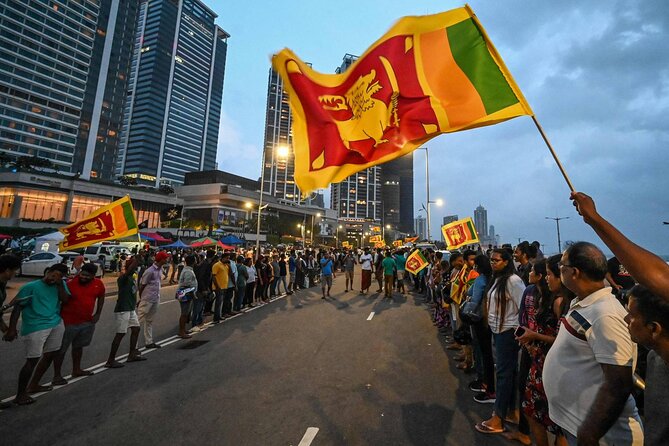
This is not a standard sightseeing loop. You are taking an evening walk that acts like a moving documentary, with an information-heavy storyline that links social issues to political decisions and economic pressure.
Sri Lanka is framed here as being in a severe crisis, with shortages of essential supplies like food, fuel, and electricity. That context matters, because it changes how you read the city. Instead of seeing buildings and markets as separate things, you start seeing how systems interact, and how people experience those systems.
If you genuinely enjoy politics, or you want to understand the current situation without getting stuck in slogans, this format is built for you. It even encourages you to form your own views through first-hand observation as you move from place to place.
The 5:00 pm start and 2.5-hour pace
The walk starts at 5:00 pm and runs about 2 hours 30 minutes. That timing is practical. It is long enough to give the story real momentum, but not so long that you lose patience or energy before the analysis finishes.
You also get the benefit of staying in the city on foot as the route transitions from commercial zones to institutional sites. Even if you do not love walking, a guided route helps because the stops are chosen to build an argument, step by step.
With a maximum of 25 travelers, it should stay manageable. Smaller groups tend to work better for interactive storytelling, because the guide can keep track of questions and adjust pacing when the group gets stuck on a point.
Colombo Port City: watching development and politics share the same frame
Port City is your first stop, and it is a strong choice for starting. When you start with a place tied to big-picture development, you set the tone for how politics and economics show up in physical space.
At this stage in the walk, expect the guide to set up background and connect it to what comes next. Think of it as the opening chapter: how modern governance, economic priorities, and public life can be linked, even when you are just standing on the street.
A practical tip here is to arrive ready to listen, not just look. The Port City stop works best when you treat it like a reference point you will return to mentally later, once you see markets, government-related spaces, and civic landmarks.
Pettah market: where everyday economics becomes a political story
Pettah market is the second stop, and this is where the walk becomes more grounded. Markets are not just colorful places for photos. They are where supply, demand, and livelihoods meet face-to-face.
Given the walk’s emphasis on the current crisis and shortages, Pettah is a natural place to talk about the social effects of economic disruption. When essentials get tight, people change routines, businesses adapt, and the pressure becomes visible fast.
This stop is a good moment to pay attention to patterns. You can watch how people move, how commerce continues, and how the market’s energy contrasts with the formal, institutional spaces you will see later.
The main consideration at a market stop is simple: bring patience. Even with a guide and a set plan, you are in an active public area, so you may need a little flexibility with pacing.
Other Colombo walks, start to finish
Good Market: comparing how different commercial spaces explain the same pressures
You then move on to Good Market. The name alone does not tell you the full story, but the placement in the route does. Having a second market stop helps you compare what you see and connect it back to the walk’s themes.
In a route built around social and political analysis, a second commerce stop helps answer a key question: are these challenges isolated, or do they show up across different kinds of market life?
Use this time to sharpen what you are looking for. Instead of scanning for the most eye-catching stalls, focus on how the space feels, how people interact, and what seems normal versus what seems strained. Those small impressions are the raw material for the walk’s broader argument.
Tea Avenue and the Dilmah Building: business branding as part of the national narrative
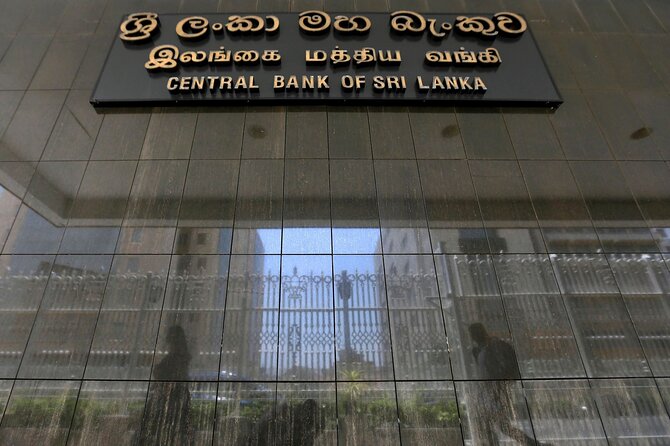
The tour heads to Tea Avenue and the Dilmah Building. This is a pivot point. Markets focus on immediate exchange, while a branded business location lets you think about longer-run economic identity and how industries shape national perceptions.
In this kind of documentary-style walk, you are not just learning facts. You are training your eye to notice how economic narratives are anchored in real places. A tea-related site can be a doorway into discussing industry, trade, and the ways economic history becomes part of public storytelling.
One practical benefit here is that this stop can help you slow down. By the time you reach this part of the route, you have already learned to connect sites to systems, so you can start seeing the pattern more clearly instead of just collecting impressions.
World Trade Center: when policies meet money
Next up is the World Trade Center. This is where the walk shifts from market-level pressure to a more institutional framing of the economy.
You can think of this stop as a bridge. It sits between commercial activity and government-linked spaces. That makes it useful for understanding how decisions move from political arenas to economic outcomes, and how those outcomes filter down into society.
Because this is a non-biased walk designed to help you decide your own view, you are not meant to walk away with a single pre-packaged opinion. Instead, you should leave with more context so your instinct feels informed, not reactive.
Old Parliament: reading governance through the spaces it occupies
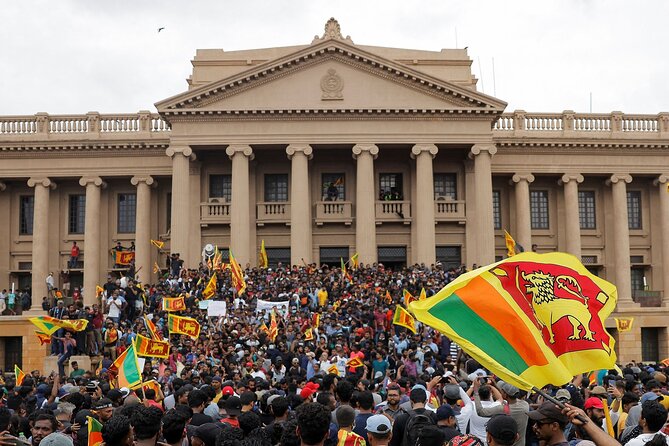
Old Parliament is one of the route stops that turns the discussion sharply toward politics. A parliament building is more than architecture. It is a symbol of how authority is organized, challenged, and translated into policy.
This is especially important because the walk is built around both historical and current events. You are asked to consider how the creation of the modern state connects to what Sri Lanka is dealing with today.
If you like politics, treat this stop like your chance to ask questions mentally. As you stand there, ask yourself: what choices lead to what outcomes, and how do those outcomes show up outside government walls?
A small drawback to note is emotional load. Even if you keep it balanced, political analysis about a real crisis can feel heavy. Pace yourself, and let the guide’s structure carry you through rather than trying to process everything at once.
Independence Square: civic symbolism and the pressure of the present
Independence Square is a key stop because it is about identity, legitimacy, and public memory. Places tied to independence often act like a mirror, reflecting what a society says it values versus what it is experiencing.
In a walk that connects politics to daily life, Independence Square is where the abstract becomes personal. The storyline about shortages and disruptions gives you a lens to understand why civic spaces do not live in the past. They react to the present.
Use this part of the walk to synthesize. You have seen markets and business, then moved into institutional and political spaces. Now you can connect the dots and start forming your own interpretation of what the country is trying to protect, and what it is struggling to manage.
BMICH: ending at a major conference hall and a reminder of public life
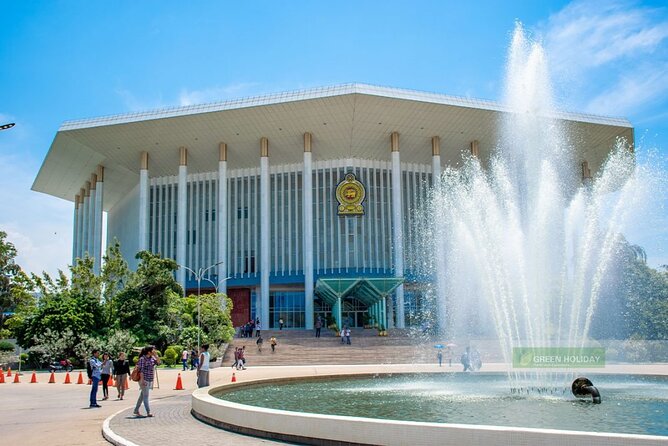
The walk ends at BMICH (Bandaranaike Memorial International Conference Hall). Ending at a conference venue is a smart final move. It keeps the focus on public life and the idea that politics is not only law and elections, it is also how societies host debate, agreements, and future planning.
By the time you reach BMICH, the route has taken you from Port City through markets and key civic symbols. That makes the ending feel like a wrap-up point, even if the story continues in your head afterward.
If you want a practical strategy, take a few minutes right after the walk to write down what you think you now believe, and what you still want to research. The walk is designed to help you do first-hand research, and that means your next steps should be personal, not borrowed from someone else’s opinion.
What makes Chami’s approach effective for first-time political thinkers
Chami is described as very well informed, and that is a big deal in a walk like this. When the topic is politics and economics, the difference between a good explanation and a confusing one is usually structure and clarity.
This experience is also framed as balanced and non-biased. That does not mean it avoids hard facts. It means the goal is to help you see multiple angles so you can decide for yourself what you think.
The most effective moment of this approach is when you can connect a historical thread to a current pressure point. For example, the crisis framing about shortages of food, fuel, and electricity is not meant to sit in the background. It is meant to affect what you notice in commerce and civic life.
If you go in with an open mind, you will get more out of the walk. If you go in wanting the guide to confirm a single opinion, you might find the balanced tone slightly frustrating. But if you are actually curious, it is the right style.
Price and value: $35.99 for an analysis-heavy walking route
At $35.99 per person for about 2 hours 30 minutes, you are paying for more than movement around Colombo. You are paying for an organized, story-driven walkthrough that links social and political ideas to specific sites.
Value here comes from three things:
- Time efficiency: you cover multiple important stops in one guided flow rather than piecing together your own route.
- Story structure: the walk is designed to have the flow of a documentary, which helps with comprehension when the subject gets complex.
- Small group size: with a maximum of 25 travelers, the experience is less like a lecture in a crowd and more like guided analysis.
Also, it is often booked about 19 days in advance on average, which suggests demand. If you want this as part of your Colombo plan, treat it like a timed activity rather than a last-minute add-on.
Who should book this walk, and who might skip it
This tour is a strong match if you:
- like politics, current events, and how economic pressure turns into social change
- want a guide to help you connect history and the present without taking away your ability to form your own opinion
- prefer walking between landmarks you can actually see, not just reading about them
You might skip it if you want a purely light sightseeing day with minimal talking. This is info-forward and focused on social and political elements. If that sounds exhausting, pick a different style of tour.
Most importantly, it fits best for travelers who are willing to look at the city with questions in mind. The walk works when you treat every stop as a clue in a bigger story.
Should you book the Colombo Social and Political Walk?
I think you should book it if your goal is understanding, not just photos. The documentary-style format, the route through major Colombo sites, and the guide’s informed approach make it a smart way to get perspective quickly, especially when the country is dealing with real-world shortages and disruption.
Book it soon if you can, since it often gets reserved about 19 days in advance. And before you go, check the weather and wear shoes that handle a city walk. If those basics line up, this is one of those experiences where you leave with a clearer map in your head, not just a list of places.
FAQ
Where does the walk start and where does it end?
It starts at The Kingsbury Colombo, 48 Janadhipathi Mawatha, Colombo, Sri Lanka. It ends at BMICH (Bandaranaike Memorial International Conference Hall), Bauddhaloka Mawatha, Colombo 00700, Sri Lanka.
What time does the experience begin?
The start time is 5:00 pm.
How long is the walk?
The duration is approximately 2 hours 30 minutes.
How much does it cost?
The price is $35.99 per person, and you receive a mobile ticket.
How large is the group?
There is a maximum of 25 travelers.
Does it run in any weather?
It requires good weather. If it is canceled due to poor weather, you will be offered a different date or a full refund.
What is the cancellation policy?
Free cancellation is available up to 24 hours in advance for a full refund. If you cancel less than 24 hours before the experience starts, the amount paid will not be refunded.
Walking Colombo, Start to Finish
- Colombo Walking Tour with Ajeet De Soyza★ 5.0 · 43 reviews
- Glimpse Of Colombo City Walk★ 4.5 · 11 reviews
More Tour Reviews in Colombo
- Colombo: Private Tuk-Tuk City Tour with All Entry Fees★ 4.9 · 2,154 reviews
- Sri Lanka Personal Tour Driver in private vehicle★ 5.0 · 747 reviews
- Colombo Tuk Tuk City Tour -Sightseeing Entry Fees & Food Included★ 5.0 · 678 reviews
- Udawalawe National Park: Elephant Safari with Expert Guide★ 4.9 · 641 reviews
- Colombo Private Tuk-Tuk City Tour with All Entry Fees Included★ 5.0 · 524 reviews
Colombo Landmarks, Three More Ways
- Colombo: Private Tuk-Tuk City Tour with All Entry Fees★ 4.9 · 2,154 reviews
- Colombo Tuk Tuk City Tour -Sightseeing Entry Fees & Food Included★ 5.0 · 678 reviews
- Colombo Private Tuk-Tuk City Tour with All Entry Fees Included★ 5.0 · 524 reviews
- Colombo: Private Tuk-Tuk City Tour with Guide & All Tickets★ 4.9 · 471 reviews
- Colombo Local Food Tour by Tuk Tuk – All Inclusive★ 4.9 · 261 reviews
Other Colombo days out to weigh up


Colombo Highlights & Landmarks, compared.
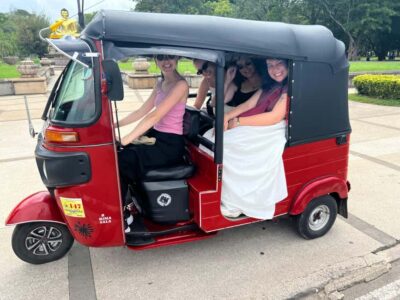 ★ 4.9Private Tuk-Tuk City Tour with All Entry FeesFrom $232,154 reviews
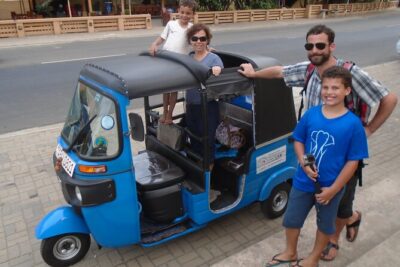 ★ 5.0Colombo Tuk Tuk City Tour -Sightseeing Entry Fees & Food IncludedFrom $34678 reviews
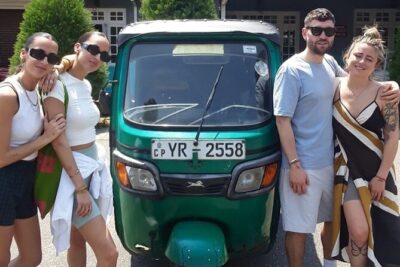 ★ 5.0Colombo Private Tuk-Tuk City Tour with All Entry Fees IncludedFrom $32524 reviews
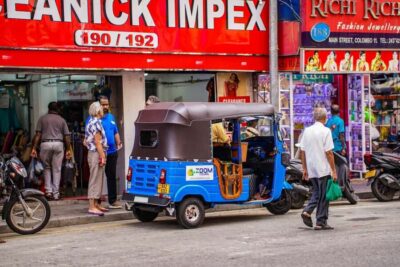 ★ 4.9Private Tuk-Tuk City Tour with Guide & All TicketsFrom $22471 reviews
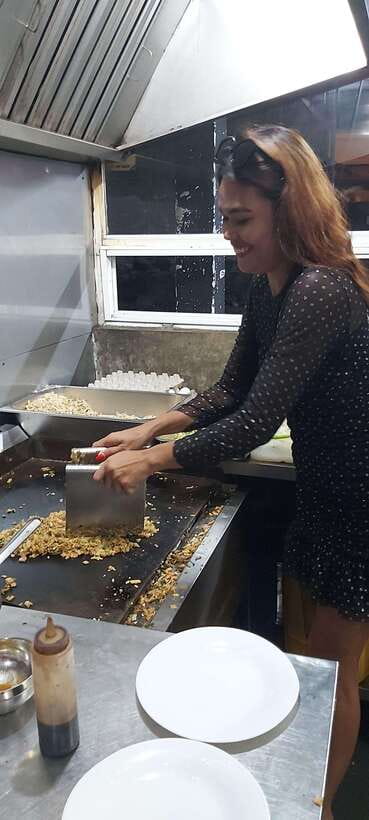 ★ 4.9Colombo Local Food Tour by Tuk Tuk – All InclusiveFrom $36261 reviews
Tuk Trip is Very Cheap in Colombo (All-inclusive ) city tourFrom $24260 reviews
★ 4.9Colombo Local Food Tour by Tuk Tuk – All InclusiveFrom $36261 reviews
Tuk Trip is Very Cheap in Colombo (All-inclusive ) city tourFrom $24260 reviews
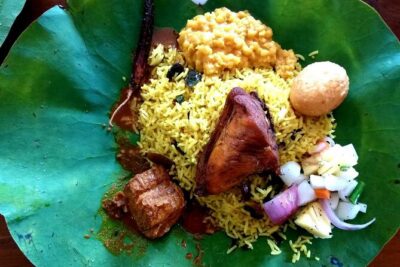 ★ 5.0Colombo Bay Tuk Tuk City TourFrom $35244 reviews
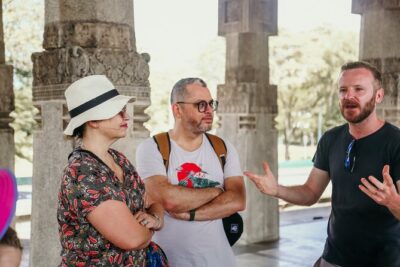 ★ 5.0Tuk It Easy ColomboFrom $60241 reviews
Where else this tour turns up