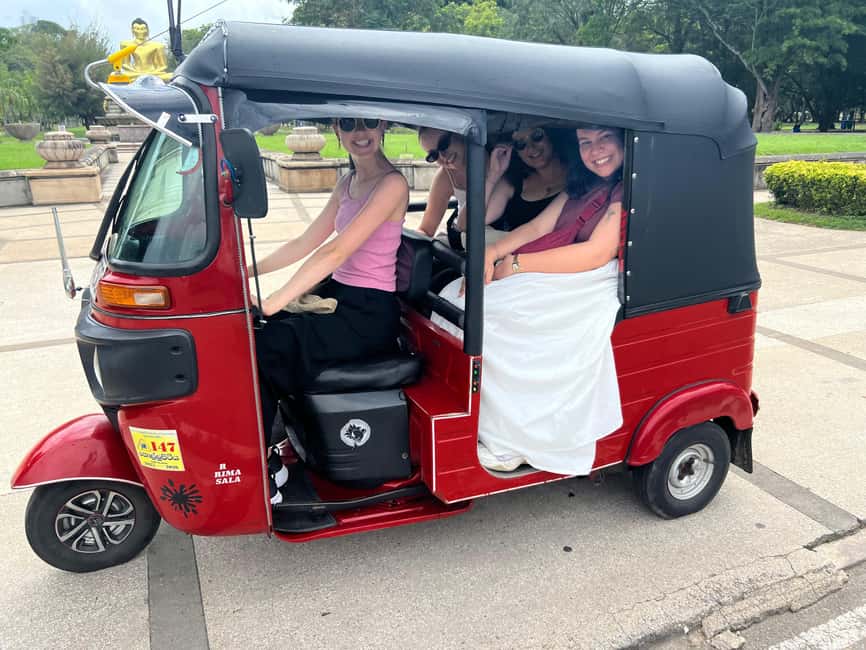
Colombo by Tuk Tuk – Sightseeing Entry Fees included

Review · COLOMBO HIGHLIGHTS & LANDMARKS

Colombo by Tuk Tuk – Sightseeing Entry Fees included

5.0 · 19 reviews From $35 Operated by Black Caviar Tours & Travels · Bookable on Viator
Book on Viator →

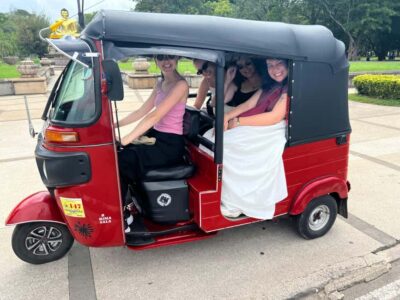
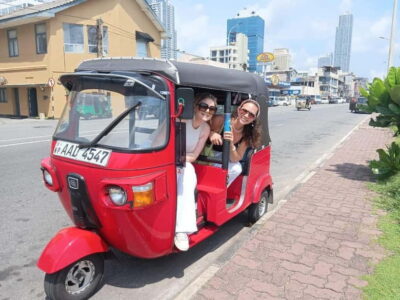
Colombo moves fast, and this tour keeps up. This private tuk-tuk sightseeing route compresses the city’s big highlights into about four hours, with hotel pickup and a driver who handles the traffic and navigation while you focus on what you came to see.

I like two things most. I really appreciate how sightseeing entry fees are covered for many stops, so you spend less time figuring out tickets and more time looking around. I also like the pace control, you get to linger when something catches your eye, instead of getting dragged along. A small consideration: a couple of charges are not included, including Gangaramaya Temple and the Old Town Hall.

Key points to know before you go

Colombo by Tuk Tuk – Sightseeing Entry Fees included - Key points to know before you go

  • A true half-day plan: about four hours, with short stops that still hit major areas.
  • Entry fees are handled for many sights: several temples and museums list tickets included.
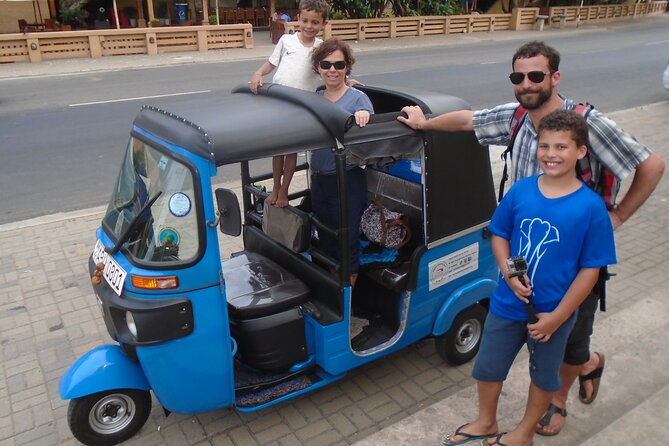
  • Private tuk-tuk convenience: the driver does the hard work on Colombo’s busy roads.
  • Multi-faith sights in one loop: Hindu temple, mosque, Dutch church, and Buddhist sites all appear.
  • Mobile ticket and bottled water: small details that make the day smoother.

Colombo in four hours on a private tuk-tuk

Colombo by Tuk Tuk – Sightseeing Entry Fees included - Colombo in four hours on a private tuk-tuk
If your Colombo time is tight, this is the kind of tour that makes sense. Instead of you trying to map routes, fight traffic, and estimate travel times between major neighborhoods, you sit back and let a tuk-tuk driver stitch the day together.

The private setup also matters. With up to 2 people per group, you are not trapped in a loud, rigid schedule. I like that it’s designed around your pace, not a checklist that punishes curiosity.

Start at Colombo Lighthouse, end where you began

Colombo by Tuk Tuk – Sightseeing Entry Fees included - Start at Colombo Lighthouse, end where you began
The tour meeting point is Colombo Lighthouse on Chaithya Road, and the experience ends back at the same place. That start-end symmetry is handy, because it removes the stress of planning a separate return to your hotel.

Also, bottled water is included. In a half-day that includes markets and multiple viewpoints, having one less thing to worry about is genuinely useful.

Sri Kailawasanathan Swami Kovil and Lotus Tower: first stops with meaning

You begin with Temple of Sri Kailawasanathan Swami Devasthanam Kovil, a major Hindu temple in Colombo dedicated to Lord Shiva. The temple is known for Dravidian-style architecture, and you get about 15 minutes with the admission ticket included.

This is a great opener because it sets the tone early. Before you start absorbing colonial-era buildings and modern landmarks, you get a sense of the city as a living place of worship, not just a photo stop.

Next comes Lotus Tower, a 350 m landmark that’s often treated like a symbol of Sri Lanka’s modern era. It’s also described as the tallest self-supported structure in South Asia. Even if you don’t plan on going inside, it’s a strong orientation point for understanding Colombo’s skyline.

Colombo Fort Railway Station and the Portuguese-Dutch-British core

Colombo by Tuk Tuk – Sightseeing Entry Fees included - Colombo Fort Railway Station and the Portuguese-Dutch-British core
After the first sights, the route pivots toward Colombo Fort, the historic and commercial heart of the city. This is the zone where Portuguese fortifications from the 16th century were later expanded by the Dutch and British, leaving behind a dense mix of colonial-era landmarks.

You also pause at Colombo Fort Railway Station, a major rail hub served by Sri Lanka Railways. The station is an important gateway to the rest of the city, so it helps you see Colombo as it functions today, not only as it looks.

Then you move through the Fort area itself, with short, timed stops that keep the day moving. The advantage of this approach is that you can hit multiple points of interest without spending half your time trying to cross the city.

More three-wheeler runs through Colombo

Fort museums and clockwork icons you can hit without planning

Colombo by Tuk Tuk – Sightseeing Entry Fees included - Fort museums and clockwork icons you can hit without planning
The Fort loop is where the tour starts feeling efficient in a very practical way. You don’t need to decide what to prioritize, because the route groups related sights closely together.

You’ll get time at the Colombo Economic History Museum, also known as the Currency Museum. It’s positioned as a journey through the island’s economic development, so it’s a break from pure architecture and gives context for what shaped the city.

There’s also the Colombo Fort Clock Tower, originally built in 1857 as a clock tower. Nearby, the Colombo President’s Museum sits within the historic President’s House, designed to offer a glimpse into political history and the era of British governors.

If you enjoy strolling among older buildings, you’ll appreciate the quick hits that add texture: the Colombo Old Post Office, the Cargills Building, and the Grand Oriental Hotel. The hotel is especially notable for opening in 1837, which makes it one of the older, iconic names in Sri Lanka. These aren’t long museum sessions, but they’re the kind of stops that make your mental map of the Fort feel real.

Pettah markets: produce, Old Town Hall, and quick cultural stops

Colombo by Tuk Tuk – Sightseeing Entry Fees included - Pettah markets: produce, Old Town Hall, and quick cultural stops
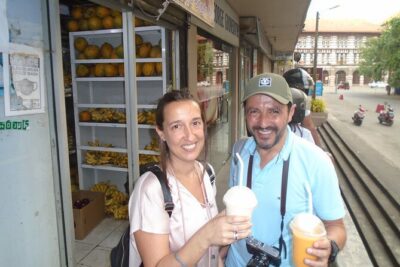
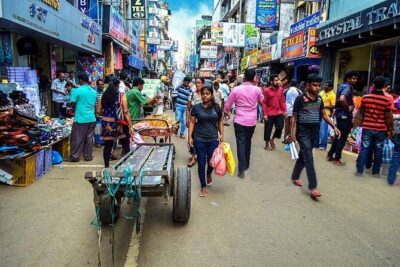
From Fort you head to Pettah, located east of the city center Fort area. Pettah is known for its markets, and you’ll get time around the Pettah Market area, where admissions are listed as free.

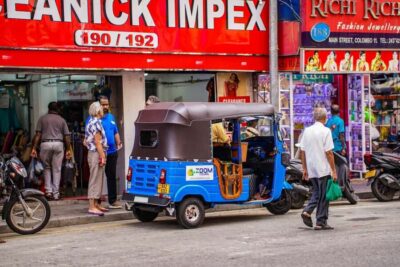
This is the section where Colombo gets louder and more hands-on. You’re close to everyday trade, with vendors and buyers moving through open-air bazaars and surrounding streets. If you want to feel how people actually shop, this is where you’ll sense it quickly.

Old Town Hall is another Pettah stop, but it comes with a small extra charge. The Old Town Hall chargers are not included, listed as $1.00 per person, and you get about 15 minutes. The description around the building emphasizes its colonial character with arches, columns, and creaky staircases, which means it’s a good architecture-and-street-scene photo stop.

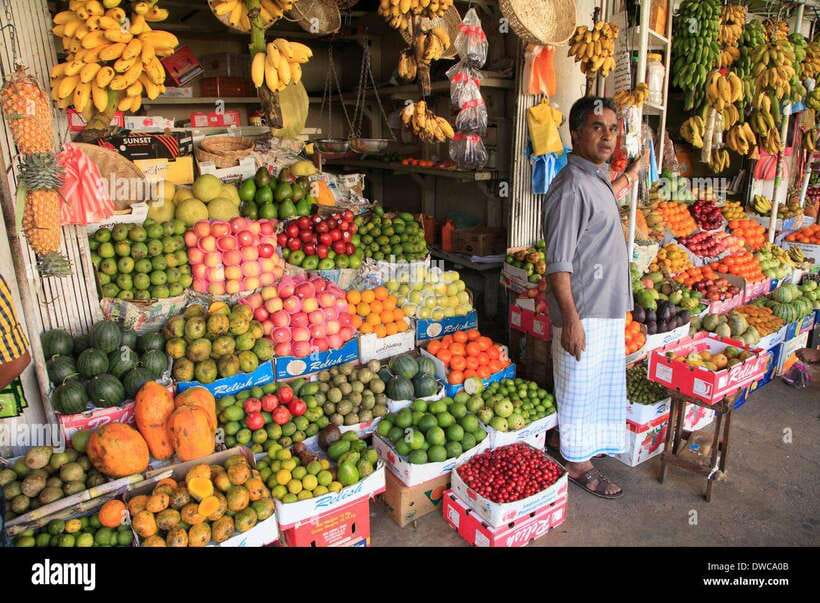
Then you shift to the Vegetable Market area, also free, with about 15 minutes. It’s a fast way to see wholesale and retail produce trade in one pocket of the city.

Kayman’s Gate, the Grand Mosque, and the Wolvendaal Church

Colombo by Tuk Tuk – Sightseeing Entry Fees included - Kayman’s Gate, the Grand Mosque, and the Wolvendaal Church
A quick stop at Kayman’s Gate Belltower marks a historic entrance to the Dutch Fort of Colombo, built during the Dutch colonial period in the 17th century. This is one of those short stops that pays off because it connects the Fort area to the Dutch era without requiring a long explanation.

You’ll also pass by the Grand Mosque of Colombo, also called Jami Ul-Alfar Mosque. It’s described as one of Sri Lanka’s iconic mosques with beautiful architecture, and it’s positioned in the Pettah area.

Another quick cultural stop follows: the Christian Reformed Church of Sri Lanka, known as Wolvendaal Church. Built in 1749 by the Dutch, it remains an important symbol of Dutch colonial influence, and the admission is listed as free with about 15 minutes. In a single short span, you’ll see how multiple faiths shaped the same neighborhoods over time.

Floating Market to Port City: shopping views and reclaimed-land change

Colombo by Tuk Tuk – Sightseeing Entry Fees included - Floating Market to Port City: shopping views and reclaimed-land change
Next up is the Floating Market on Beira Lake. It’s listed with admission ticket included and about 10 minutes on the route. Opened in 2014, it’s described as a shopping and tourist attraction built over the lake, designed to blend commerce with scenery.

This stop is practical if you like variety. You get a break from temples and colonial buildings, and instead you experience something modern that feels local, even if it’s also set up for visitors.

You then move toward Port City Colombo, a large urban development on reclaimed land along the coastline. The project is described as being launched in 2014, backed by China Harbour Engineering Company (CHEC). The stop is short, but it gives you a sense of where Colombo is headed, not just where it’s been.

Maritime Museum plus Colombo Lighthouse: look closer at the harbor story

Colombo Lighthouse is another highlight on the route, near Colombo Harbour and described around Galle Face Green. The Galbokka Lighthouse is identified as a modern lighthouse built in 1952, replacing an older Colombo lighthouse. It’s a great moment for photos because it frames the harbor area in a way that feels different from the Fort streets.

Right after that, you’ll get time at the Colombo Port Maritime Museum, operated by the Sri Lanka Ports Authority. The museum is described as being adjacent to the Colombo Port, and it lists admission ticket included, with about 15 minutes.

If you like understanding how a city runs economically, this is a worthwhile segment. You’re seeing how the port fits into the whole Colombo picture, not only as a backdrop but as a driving force behind movement and trade.

Maritime Museum plus Colombo Lighthouse: look closer at the harbor story

Colombo Lighthouse is another highlight on the route, near Colombo Harbour and described around Galle Face Green. The Galbokka Lighthouse is identified as a modern lighthouse built in 1952, replacing an older Colombo lighthouse. It’s a great moment for photos because it frames the harbor area in a way that feels different from the Fort streets.

Right after that, you’ll get time at the Colombo Port Maritime Museum, operated by the Sri Lanka Ports Authority. The museum is described as being adjacent to the Colombo Port, and it lists admission ticket included, with about 15 minutes.

If you like understanding how a city runs economically, this is a worthwhile segment. You’re seeing how the port fits into the whole Colombo picture, not only as a backdrop but as a driving force behind movement and trade.

Tea tasting, Gangaramaya Temple, and independence-era landmarks

Zylen Tea is next, with a Ceylon tea tasting experience and admission ticket included, about 15 minutes. The description frames it as part of Sri Lanka’s tea culture, noting it as the birthplace of Ceylon Tea. If you’re a tea fan, you’ll likely enjoy this as a quick, memorable taste of local identity.

After tea, you’ll stop at Gangaramaya Temple. Admission ticket is not included here, and the Gangaramaya Temple chargers are listed as $2.00 per person. The temple is described as mixing modern architecture and cultural essence, completed in the late 19th century. This is a good stop for variety, because it shifts you from markets and museums into a place that still feels like part of daily Colombo life.

Then the tour moves to Independence Memorial Hall, with admission ticket included and about 10 minutes. It commemorates Sri Lanka’s independence from British rule on February 4, 1948. It’s one of those stops where even a short visit can connect your sightseeing to a bigger national story.

Right after that is the Cenotaph War Memorial, also with admission ticket included and about 10 minutes. It honors those who lost their lives in military conflicts, particularly World War I and World War II. The site description even notes the most famous Cenotaph is in Whitehall, London, but your focus here is Sri Lanka’s own remembrance.

You’ll also pass by the Colombo Municipal Council (CMC), described as the oldest and largest local government authority in Sri Lanka, established in 1865. Nearby is Viharamahadevi Park, described as the oldest and largest public park in Colombo, formerly known as Victoria Park during the British colonial era.

Price check: $35 per group, and what entry fees really mean

The price is $35.00 per group, up to 2 people, and the tour runs about four hours. That makes it a strong option for couples, friends, or anyone traveling with a companion, because the cost is per group, not per head.

Value comes from three areas. First, you get private transportation by tuk-tuk, plus bottled water. Second, the tour description emphasizes sightseeing entry fees included, and many stops explicitly list admission ticket included or free. Third, you’re spending your paid time on targeted stops, not sitting in traffic while you try to coordinate everything yourself.

Two small charges are not included: Gangaramaya Temple chargers at $2.00 per person, and Old Town Hall chargers at $1.00 per person. If you plan for those in advance, they don’t become a surprise bill at the worst moment, like when you’re already in a hurry for the next stop.

It also helps that the experience has a very high rating, 4.9 out of 5, with 100% recommended in the provided summary. The consistent theme in the feedback is the driver and the pacing, and a name that shows up for this kind of friendly, question-friendly guiding style is Mr. Mugilan.

How to get the most out of a fast half-day

This tour is built for people who want to see a lot without overplanning. The stop times are short, so your best move is to decide what kind of photos you want in advance. If you know you want mosque exteriors, colonial facades, and harbor views, you’ll get a satisfying sweep.

I also suggest you bring small cash for the two optional charges that are not included, $2 for Gangaramaya Temple and $1 for Old Town Hall. That way you can pay on the spot without trying to scramble for change while the tuk-tuk waits.

Finally, lean into the driver role. This tour is designed around the driver handling navigation and keeping the day flowing, so ask questions as you go. The strongest part of this experience is not speed for speed’s sake, it’s clarity plus convenience.

Should you book Colombo by Tuk Tuk?

Book it if you want a private half-day that hits Fort colonial landmarks, Pettah market life, and the port area, all with less logistical stress. It’s especially good for first-time Colombo visitors who want a fast orientation and for anyone who hates the idea of figuring out routes on busy roads.

Skip it if you want slow, deep museum time or long guided tours inside every stop. This is a tight circuit with short visits, so you’ll get the highlights, but not hours and hours at one place.

FAQ

How long is the Colombo tuk-tuk sightseeing tour?

It runs for about 4 hours.

How much does the tour cost?

The price is $35.00 per group, up to 2 people.

Is hotel pickup and drop-off included?

Pickup is offered, and the tour starts with hotel pickup and ends back at the meeting point.

What does the tour include?

Included items are bottled water and private transportation. You also receive a mobile ticket, and sightseeing entry fees are listed as included.

What are the admission charges not included?

Gangaramaya Temple chargers are $2.00 per person, and Old Town Hall chargers are $1.00 per person.

Does the tour include admission tickets for specific stops?

Yes, several stops list admission tickets as included, and some stops are listed as free.

Where does the tour start?

The meeting point is Colombo Lighthouse, Chaithya Rd, Colombo 00100 (WRPR+G86).

Is this a private tour?

Yes, it is private, and only your group will participate.

What is the cancellation policy?

Free cancellation is available. You can cancel up to 24 hours in advance for a full refund.